

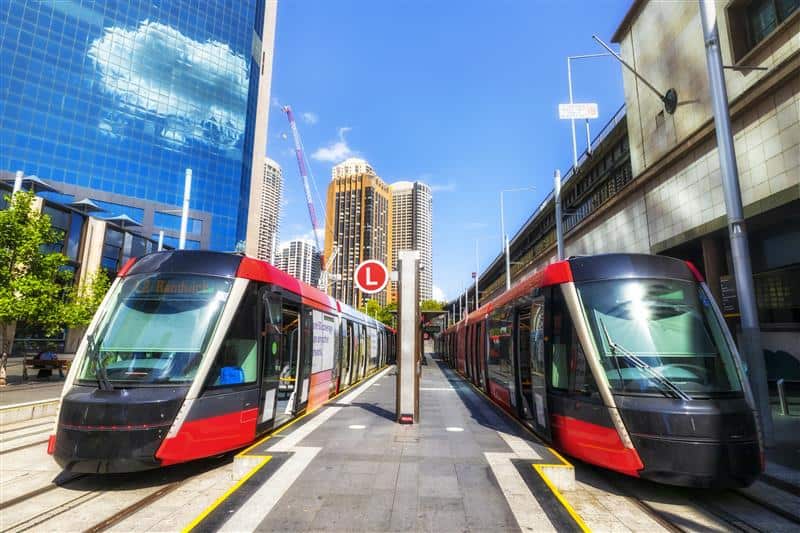
Like in most countries, public transport in Australia is the cheapest way to get around. It includes trams, buses, trains and ferry services. And each state or territory has its own transport network. However, navigating Australia’s public transport system with ease requires knowing the basics around how it works and what to expect.
Key Points
- Every state operates its own public transport network, so rules and rates differ
- Pre-paid smartcards are available in all major cities and payment options may include contactless bank card transactions
- Ticketing compliance and safety are checked by staff and the use of CCTV cameras in all transport networks
- Is public transport available anywhere in Australia?
- What is the pre-paid card for public transport in the city I live in?
- How do I use a smartcard?
- Can I pay with my bank card for public transport in Australia?
- What can authorised officers check for in stations and on board?
- What are some public transport offences?
- What happens if I get a fine?
- What is the etiquette for using public transport in Australia?
- Do I have to keep quiet when using public transport in Australia?
Is public transport available anywhere in Australia?
Most Australians travel to work by car.
It’s a statistic produced by the Australian Bureau of Statistics (ABS) since 1976, when it first started asking the question.
Professor John Nelson is Chair in Public Transport at the University of Sydney’s Institute for Transport and Logistics Studies.
He says Australia’s sprawling cities and large distances between them, makes it hard to serve rural areas by public transport.
“Because even as you travel out of Sydney, you see that the properties become very spread out.”
But in densely populated urban areas and metropolitan cities, public transport is in many ways faster, cheaper and even essential for some users.
What is the pre-paid card for public transport in the city I live in?
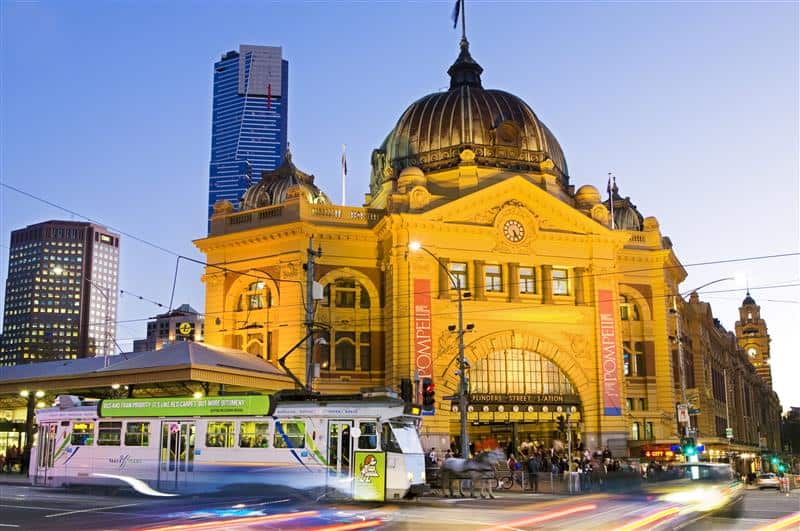
Every state or territory has its own transport network, with major cities and towns operating on a smart card ticketing system for cashless payments.
The pre-paid card used in each state or territory capital is:
- Opal card for Sydney
- Myki for Melbourne
- go card for Brisbane
- SmartRider for Perth
- metroCARD for Adelaide
- GreenCard for Hobart
- Tap and Ride Card for Darwin
- MyWay for Canberra
How do I use a smart card?
Smart card systems are generally easy to navigate, Prof Nelson says.
But in case you haven’t used one before, here’s what you need to know.
“It’s usually about the size of a credit card, you can preload it with value and use it to access the public transport system, be that bus, train, tram or ferry.”
On how to use it, the clue is often in the name.
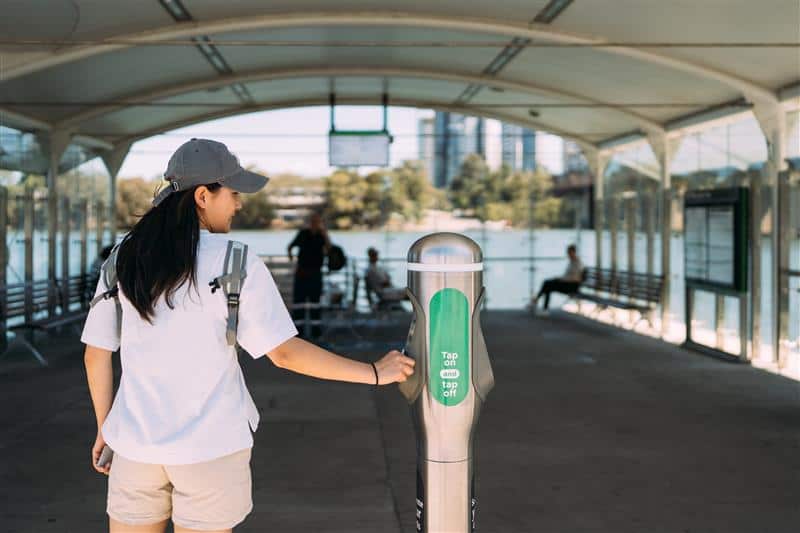
“Tap on and tap off. Sometimes there'll be what we call a gate or a barrier where you have to tap your card. In other cases, a payment pole with a card reader,” Prof Nelson explains.
Common features of smart cards include concession rates for youth and pensioners, discounted fares for trips on public holidays and during the weekend, as well as daily and weekly pricing caps.
Can I pay with my bank card for public transport in Australia?
Depending on where you travel, you may be able to pay cash for tickets. For example, cash is still accepted in Western Australia.
But paying with your bank card for public transport is becoming increasingly common across the country.
“Not all states and cities have that facility yet,” Howard Collins, Coordinator General for Transport for New South Wales explains.
“But in NSW for example, 60% of all our transactions now are ‘using your bank card’.”
“More and more people are using their credit or debit card, sometimes their watch or their phone to tap on and off.”
When scanning your bank card on a card reader for a ticket check, the compliance officer can only see your payment information, Mr Collins adds.
“So, there's no worries about addresses or other information on your credit or debit card.”
What can authorised officers check for in stations and on board?
Authorised officers conduct ticket and safety checks, while CCTV cameras are installed on board and in stations.
People should feel confident to approach public transport staff for safety matters, Charlotte Hayes says.
She is the Executive Director of Customer Strategy and Communications at Western Australia’s Public Transport Authority.
“Our security personnel are here to help.
“So, if you either witness antisocial behaviour or are subject to untoward behaviour you are safe to go and speak to a security officer,” Ms Hayes says.
What are some public transport offences?
Public transport offences include ticketing and behaviour offences for which you can be fined or charged.
Examples applying across Australia include:
- travelling without a valid ticket, or
- without proof of your concession entitlement
- smoking and drinking alcohol
- putting your feet on the seat
What happens if I get a fine?
If you get a fine and you feel you’ve been wronged, you can seek legal help or dispute it through your public transport agency.
“There's a team that look at infringements. Go to your agency’s website, and you can find out how to appeal the infringement,” Ms Hayes explains.
“Don't just put the fine in a drawer and forget about it.
"Because those fines can escalate and […] it impacts your credit, your ability to get a driver's licence and other serious things.”
What is the etiquette for using public transport in Australia?
Common rules and expectations when using public transport across Australia are:
- Not disturbing the driver
- Giving up your seat for those in need
- Allowing passengers get off before boarding
- Keeping bags off seats
- Avoid eating strong-smelling food
Do I have to keep quiet when using public transport in Australia?
Keeping conversations and music low is expected for commuters across Australia’s networks.
Remember that sharing the space means sharing the noise with other commuters, Ms Hayes says.
“It's those bits of etiquette that make sure the public transport system works for everybody.”
And always check if you’re in a space designated as ‘quiet’, Prof Nelson from the University of Sydney advises.
‘That means no loud conversation, no taking phone messages.
“Quiet coaches tend to be pretty well respected, and people shouldn't be surprised if a complete stranger turns around and says ‘can you stop talking? You're in a quiet coach.’”
Subscribe to or follow the Australia Explained podcast for more valuable information and tips about settling into your new life in Australia.
Do you have any questions or topic ideas? Send us an email to australiaexplained@sbs.com.au