
How does IVF work in Australia?

a pregnant woman holds an ultrasound with a photo of the baby in her hands

In Vitro Fertilisation offers a way to parenthood for thousands every year in Australia, including same sex couples, single parents, women and men facing fertility issues. Source: Moment RF / Maria Legoshina/Getty Images

Did you know that IVF is not the first, but in fact the last step in a sequence of fertility treatments? In Vitro Fertilisation is regulated by state and territory laws. It can also be expensive and emotionally challenging. Here’s what to expect when aiming to start a pregnancy with IVF in Australia.


Key Points
  • Data from all IVF clinics in Australia are available on a government-funded website
  • Experts advise examining various factors when choosing a fertility clinic
  • Make sure to check if you are eligible for government-funded fertility services
  • Fertility counselling helps you understand and prepare for any possible outcome of yours or your partner’s fertility treatment

In the years since the world’s first successful IVF application in 1978, it is estimated that between 10 and 13 million babies have been born via In Vitro Fertilisation across the globe.

Australia is among the countries with the highest rate of IVF cycles undertaken per capita.

According to latest available statistics, one in 16 babies born in Australia in 2022 were conceived through IVF.

This number is based on information collected by the Australian and New Zealand Assisted Reproduction Database (ANZARD).

Professor Georgina Chambers directs the research unit at the University of New South Wales that operates this national IVF registry.

“We get 100 per cent of IVF cycles reported to us by clinics,” Prof Chambers says, “because otherwise they would not be in accordance with their code of practise and their licencing agreement.”
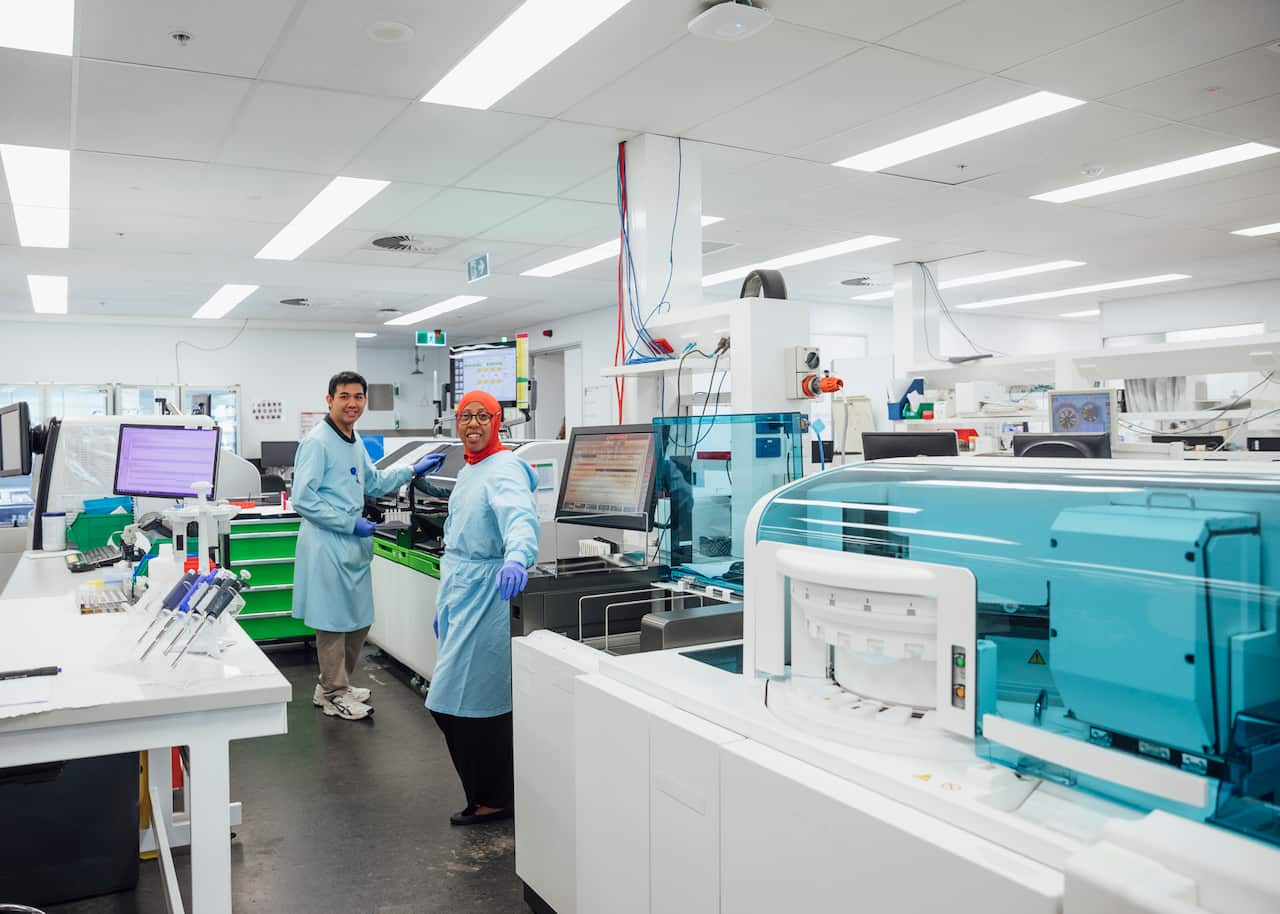
Another Day of Research
Submitting data to the national IVF registry is mandatory for all fertility clinics in Australia. ANZARD data undergoes annual audits as part of a clinic’s accreditation. Credit: SolStock/Getty Images

ANZARD data are publicly available on yourivfsuccess.com.au, a website run independently of any clinic and funded by the Australian government.

Beyond national statistics and information about IVF treatment, site visitors can make use of personalised online tools.

One such tool is an estimator for females undergoing IVF treatment to calculate their chances of success.

“It allows people to enter information about themselves, such as their age, their partner's age, their diagnosis if they've got one, any previous history of IVF treatment that they've had,” Prof Chambers explains.

How do I choose an IVF clinic?

There is also an online database for IVF clinic success rates, compared to the national average of all IVF cycles in Australia.

“Patients can search by the name of the clinic, or they can pop in their postcode and search for clinics that are near them.”

But choosing a clinic that suits your individual needs is a complex decision that should not be merely based on success rates.

Smiling female healthcare worker showing in vitro fertilization chart while discussing with patient in clinic
“I think it's important for patients to receive referrals from others in their community groups who received fertility treatment from a clinic and found it was supportive to their specific needs,” Dr Wale says. Credit: Maskot/Getty Images/Maskot

“A common misconception would be that the most expensive clinic is the best or that newer technology always guarantees success,” Petra Wale, President of the Fertility Society of Australia and New Zealand, says.

“The right clinic will be the one that listens to you, explains your options clearly, makes you feel supported every step of the way and can identify your needs and try to meet them.”

Dr Wale, whose background is in clinical embryology, encourages people to ask fertility clinics about their approach, including questions about:

  • the level of personalised care offered 
  • transparency and scientific rigour safeguards 
  • support services available 
  • whether they tailor the treatment for their specific needs 
  • whether they tailor for cultural requirements 
Midsection of lesbian woman injecting syringe in abdomen during IVF test at home
If your fertility specialist is recommending an optional add-on in your treatment, ask them about the benefits it will offer you and whether it’s worth the cost. Credit: Maskot/Getty Images/Maskot

Who provides my IVF treatment?

When undergoing fertility treatment, you will work directly or indirectly with a multidisciplinary team of medical professionals.

They include your fertility specialist who will examine you and recommend an intervention, the fertility nurse, the clinical embryologist working in the laboratory, and the fertility counsellor.

Is IVF expensive?

Fertility treatments, including IVF, can be costly. Most people will have to pay the full, or at least some of the costs, through their private health insurance.

Eligible patients may be able to claim Medicare rebates. Your state or territory’s health service may also provide government-funded services.

Make sure to check with your doctor what applies in your individual case.

Associate Professor Alex Polyakov is a senior fertility consultant at the Royal Women’s Hospital, one of the service providers in Victoria offering fertility services through the public health system.

“The Public Fertility Service accepts referrals from GPs and then patients come in and have all the investigations. And that is usually followed by treatment, whatever is required.

Is IVF the only option?

“What’s important to remember is that IVF is not the first step. It is actually the last step in a sort of sequence of treatments,” Associate Professor Polyakov says.

Ovulation induction and intrauterine insemination are some other types of fertility treatments.

Three persons talking in the office
Fertility treatment, like IVF, whether at a private clinic or a public services provider, starts with a doctor’s referral and involves history taking on your first visit to the clinic, and medical examinations. Source: Moment RF / Fiordaliso/Getty Images

Will I receive support when choosing IVF?

Depending on your state or territory, fertility counselling may be mandatory by law for certain assisted reproductive treatments.

Mental health support is important, as it helps people address challenges in their relationships and decision-making during fertility treatment, Dr Wale says.

“Support can make all the difference.

“If patients are struggling, this is not a failure—it is just a sign that they need to reach out.”

And remember, infertility is not uncommon, nor something to be ashamed of.

“It's experienced by every aspect of our society and every culture and every ethnicity,” Dr Wale says.

“Somebody’s desire to pursue the right to have a family should be encouraged and supported, which is what fertility treatment is all about.”

Disclaimer: This information is general in nature. Contact your health practitioner for clear advice on your condition.

Subscribe or follow the Australia Explained podcast for more valuable information and tips about settling into your new life in Australia.

Do you have any questions or topic ideas? Send us an email to australiaexplained@sbs.com.au

spk_0

SBS acknowledges the Traditional Custodians of Country and their connections and continuous care for the skies, lands and waterways across Australia.

spk_1

You're listening to Australia Explained, an SBS audio podcast helping you navigate life in Australia.

spk_2

IVF or In Vitro Fertilisation is a pathway to parenthood for many people across Australia. For some, it helps overcome fertility issues. For others, it opens the door to having a family as a same-sex couple or as a single parent.

spk_2

Because IVF is regulated differently across states and territories, the process can feel complex at first.

spk_3

Support can make all the difference. Many people do find strength in talking to a fertility counsellor. They can also join peers and support groups.

spk_2

I'm your host, Maram Ismail. In this episode, we break down what to expect when deciding to go through IVF in Australia.

spk_2

When the world's first IVF baby was born in the UK in 1978, it changed the future of fertility treatment. Today, In Vitro Fertilisation is widely used around the world, and Australia is among the countries with the highest rate of IVF cycles per capita. Professor Georgina Chambers is the director of the National Perinatal Epidemiology and Statistics Unit at the University.

spk_2

of New South Wales. She also oversees the Australian and New Zealand assisted reproduction database known as ANZARD. This national registry tracks every IVF cycle carried out across Australia and New Zealand, Professor Chambers says.

spk_4

So we get 100% of cycles reported to us because otherwise they would not be in accordance with their code of practise and their licencing agreement.

spk_4

So we have a very rich amount of data to produce statistics on, to undertake research, to inform the public, and to populate the your IVFsuccess.com.au website, which is a website for people to find out about IVF treatment in Australia.

spk_2

The data collected feeds into your IVFsuccess.com.au, a website funded by the Australian government and independent of

spk_2

fertility clinics. The University of New South Wales gathers the information and presents it in a way that's accessible to the public. So what can people actually learn from the site? Visitors can explore national IVF statistics and use interactive tools tailored to their own situation. One of these tools helps females undergoing IVF estimate their chances of having a baby, Professor Chambers explains.

spk_4

And that's an online calculator that allows people to enter information about themselves, such as their age, their partner's age, their diagnosis if they've got one, any previous history of IVF treatment that they've had, and then they can get a personalised individual estimate of their chance of having a baby through IVF.

spk_2

IVF success rates for all clinics in Australia are also available to the public.

spk_2

Through an online database.

spk_4

Patients can search by the name of the clinic, or they can pop in their postcode and search for clinics that are near them. And then for each of those clinics, we provide success rates and compare those to the national average of all IVF cycles in Australia. So that gives patients a way of comparing IVF clinics that are near them before they visit a clinic.

spk_4

Petra

spk_2

Wale is the president of the Fertility Society of Australia and New Zealand. Her background is in clinical embryology. She says success rates are only part of the picture.

spk_3

What matters just as much, if not more, is the level of personalised care, the transparency, the scientific rigour, and the support services that are available. Patients really need to know that it's OK to ask clinics about their approach to patient care. How do they tailor the treatment for this patient?

spk_3

And how do they support people when things don't go to plan, or in this particular audience, how do they tailor for multicultural differences and requirements?

spk_2

Fertility treatments, including IVF can be costly. Most people will have to pay the full, or at least some of the costs through their private health insurance. Eligible patients may be able to claim Medicare rebates, and your state or territory's health service may also provide.

spk_2

Government-funded services. It's important to speak with your doctor to understand what support is available to you. Associate Professor Alex Polyakov is a senior fertility consultant at one of the service providers in Victoria, providing fertility services through the public health system. He says IVF is not the only treatment for infertility and provides a couple of examples of fertility services offered at the Royal

spk_2

Women's Hospital.

spk_5

And so there is a unit called the Public Fertility Service which accepts referrals from GPs, and then patients come in and have all the investigations, and that is usually followed by treatment, whatever is required. For example, they provide ovulation induction, they provide intrauterine insemination and IVF service.

spk_2

Whether you choose a public provider or a private clinic, the first steps

spk_2

are usually the same. You'll first need a referral from your family doctor. You'll then provide your history during your first visit to the fertility clinic and undertake a series of medical examinations.

spk_5

The second appointment is the most important appointment because then we look at all the results and try to work out what the problem might be. And then depending on what is identified, we would formulate a treatment plan. So for example, someone may

spk_5

have an ultrasound and they didn't know, but they may have some sort of abnormality like big fibroids or significant endometriosis, then you have to decide whether to treat it surgically before doing IVF or to do IVF and see how it goes. It all depends what you find

spk_2

Throughout the process, people are supported by a team of specialists. Dr. Wale from the Fertility Society of Australia and New Zealand explains who's involved.

spk_3

Your fertility specialist, where the patient first interacts on their fertility journey and prescribes some sort of intervention. So a fertility nurse will help the patient understand the medication. The clinical embryologist will sit behind the scenes in the laboratory setting, and the fertility counsellor in terms of psychological support.

spk_2

Depending on your state or territory, fertility counselling may be mandatory by law for assisted reproductive treatments like IVF.

spk_2

Especially those involving sperm or egg donation and surrogacy. The cost of this counselling is included in treatment fees. This type of counselling has a specific focus, Associate Professor Polyakov explains.

spk_5

It's more counselling as to what happens if, for example, a couple creates embryos and then they split up. What happens to those embryos? What would you like to happen? These sorts of things,

spk_2

even when it's not mandatory.

spk_2

Wale says counselling can be a crucial source of support. It helps you understand and prepare for any possible outcome during your or your partner's fertility treatment.

spk_3

Support can make all the difference. Many people do find strength in talking to a fertility counsellor. They can also join peers and support groups.

spk_3

Importantly, their fertility journey does not have to be a solo experience.

spk_2

And before we let you go for this episode, remember that infertility is common. It's nothing to be ashamed of.

spk_3

It's experienced by every aspect of our society and every culture and every ethnicity, and the right to have a family is a fundamental right, and somebody's desire to pursue that right should be encouraged and supported.

spk_2

Thank you for listening to this episode of Australia Explained, written and produced by Zoe Thomaidou, hosted and mixed by me, Maram Ismail. Australia Explained managing editor is Roza Germian.

spk_1

This was an SBS audio podcast. For more Australia explained stories, visit sbs.com.au/Australiaexplained.

spk_2

Subscribe or follow the Australia Explained podcast for more valuable information and tips about settling into your new life in Australia. Do you have any questions or topic ideas? Send us an email to australiaexplained@sbs.com.au.

END OF TRANSCRIPT

Share