How to cater for your dietary restrictions

GettyImages-2202444629.jpg

It's important that you tell the restaurant staff that you have a food allergy

Australia is known as the allergy capital of the world. Our diverse population also means that we express our religious beliefs, ethics, health and personal choices through the food we eat. We called on some experts to help us navigate all the labelling, certifications and resources that can inform our food choices.


From respecting religious food restrictions to ethical and health-based food choices, chances are we all have some kind of food restriction or know someone who does.

Let’s begin with food allergies, which, if ignored, can have fatal consequences. As many as one in 10 Australian infants have a diagnosed food allergy, the most common being egg. By the time we reach adulthood, one in 50 of us has a food allergy.

Clear food labelling is critical.

Are ingredients always listed on food packaging?

To help consumers easily identify ingredients and allergens, Food Standards Australia New Zealand introduced Plain English Allergen Labelling.

‘Statement of ingredients’

All packaged food must now include a comprehensive ingredients list, called the ‘statement of ingredients’. The statement of ingredients must appear on a label in an obvious place using its plain English name and emphasising any common food allergens.

“That plain English word has to be in bold,” Ingrid Roche, practicing dietician with the National Allergy Council, says.

“Say for example, you have cheese, and then in brackets you would have milk in bold letters, or if peanut's an ingredient, the peanut would be in bold, so it stands out from the rest of the ingredients list.”

GettyImages-2161809042.jpg
Cereals that contain gluten—so wheat, rye, barley and oats—must also be listed on the label to advise those with Coeliac disease and gluten intolerance.
You’ll see that peanuts and tree nuts such as almond, cashew, hazelnut and macadamia are listed separately to assist those who may be allergic to one but not the other.

Similarly, crustacea are listed separately in case someone is allergic to prawns but not mussels, for example.

Cereals that contain gluten—so wheat, rye, barley and oats—must also be listed on the label to advise those with Coeliac disease and gluten intolerance.

If a product is gluten free, it won’t always be displayed on the packet. The ingredients list will indicate whether the food actually contains gluten. 

The ‘contains’ statement

Plain English Labelling also requires a ‘contains’ statement.
Next to or underneath the ingredients list there's another sentence that says ‘contains’. It's like a summary list of all of the common allergens that are in that food product.
Ingrid Roche

Are you safe dining out with food allergies?

Grocery shopping is one thing, but dining out with severe food allergies can be a stressful experience.

It's important that you tell the staff that you have a food allergy. Ingrid Roche has a valuable tip.

“Allergy & Anaphylaxis Australia have a chef card, so it's a little wallet-sized card that lists your food allergies. And when you go into a restaurant or a cafe or a takeaway store, you can pull that little chef card out, you can say to the staff, ‘I have a food allergy—can you please give this card to the chef?’”
The National Allergy Council offers some simple suggestions:
  • Go at quieter times so that you can speak with staff. 
  • Choose the venue carefully and order simple meals with fewer ingredients. 
  • Avoid buffet style eating due to cross-contamination. 
  • Always carry your allergy medication with you. 

Young People Eating Together
Halal dining can be more challenging than shopping for halal products, and businesses are sometimes reluctant to display the Halal logo on their premises. Credit: FreshSplash/Getty Images

Do you observe a kosher diet?

Shosh Landau, Chief of Marketing and Logistics at Kosher Australia, says they are one of two main kosher certification agencies in the country.

Look out for their logo: a map of Australia with a ‘K’ in the centre, within a circle.

However only a low percentage of products actually feature the logo, so it’s best to check if products are kosher certified via the Kosher Australia app.

The app recently introduced a barcode scanning feature. This makes it much easier for consumers to shop in mainstream supermarkets instead of specialty stores, Ms Landau says.

“If it's not coming up with a barcode, you can still search and see if that product's available within the app. Maybe the barcode just hasn't been updated. And that works worldwide. We also have a Facebook group where we answer questions directly as well.”

Do you observe a halal diet?

Around three per cent of Australians observe a halal diet, and the sector is rapidly expanding.

Dr Muhammad Khan is CEO of Halal Australia, a Halal certification body recognised by the Department of Agriculture.

He advises consumers in the grocery aisle to look for certification labels from trusted halal authorities.

“If there’s a logo, there’s a certain level of assurance that yes, the product is halal,” he says. “But there's a hiccup in Australia with the anti-halal campaign."
Some companies actually chose not to put the halal logo. So that makes things very difficult for the consumers.
Dr Muhammad Khan
The Halal Australia website offers tips for food shopping and they can advise on product ranges that they certify.

Halal apps such as Halal Advisor provide valuable help to consumers, although they’re not officially endorsed by Halal Australia.

Is it easy dining out kosher?

Unfortunately ,we can’t just go into any restaurant and order a kosher meal. The entire restaurant must be kosher certified, and the Kosher Australia app includes a comprehensive list.
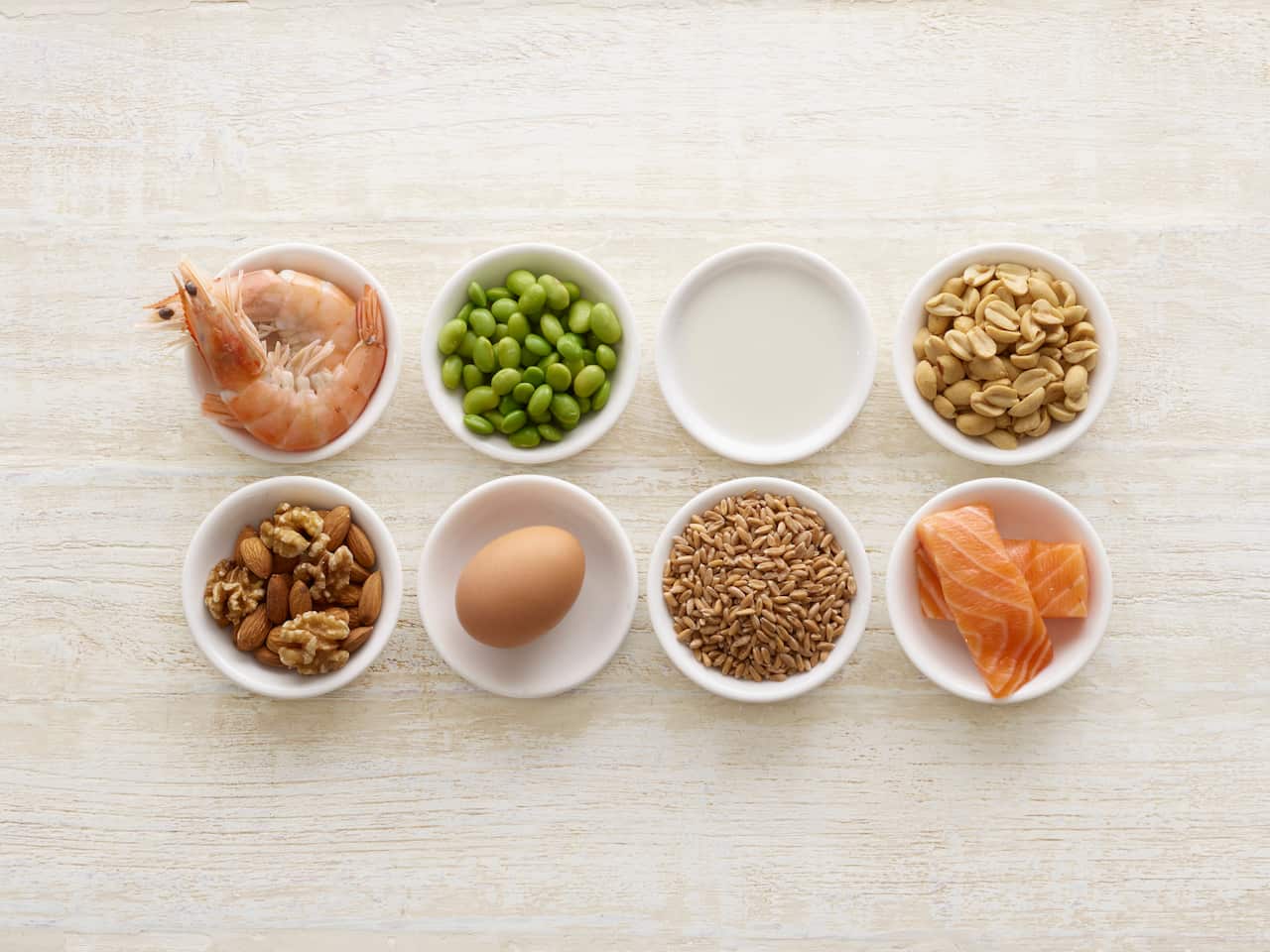
Allergenic foods in bowls
Allergenic foods in bowls, still life. Credit: SCIENCE PHOTO LIBRARY/Getty Images/Science Photo Libra

Is it easy dining out halal?

Halal dining can be more challenging than shopping for halal products, and businesses are sometimes reluctant to display the Halal logo on their premises.

“The apps are there and I commend those groups that try to help the consumers… for example, Halal Food Sydney, Halal Food in Melbourne,” Dr Khan says. “They developed some kind of information space. There are thousands of consumers who want clarity and we can see for ourselves inconsistencies in what is certified.”

Ultimately, it’s safest to do your own research.

Useful resources
Subscribe to or follow the Australia Explained podcast for more valuable information and tips about settling into your new life in Australia.   

Do you have any questions or topic ideas? Send us an email to australiaexplained@sbs.com.au 

spk_0

SBS acknowledges the Traditional Custodians of Country and their connections and continuous care for the skies, lands and waterways across Australia.

spk_1

You're listening to Australia Explained, an SBS audio podcast helping you navigate life in Australia.

spk_2

Did you know that Australia is known as the allergy capital of the world? The country's diverse population means people express their religious beliefs, ethics, health needs, and personal choices through the food they eat.

spk_3

And of course, the most important thing is that when you eat out, you must carry your allergy medication with you, so

spk_3

if you have an adrenaline device or antihistamine or whatever it is you use, that's on your action plan, you must carry your medication with you.

spk_2

This is Australia Explained, and I'm your host, Maram Ismail. In this episode, experts share guidance to help you navigate the labels, certifications, and resources that can support informed food choices.

spk_2

From respecting religious food restrictions to ethical and health-based food choices, chances are we all have some kind of food restriction or know someone who does. Let's begin with food allergies, which, if ignored, can have serious or even fatal consequences. As many as 1 in 10 Australian infants have a diagnosed food allergy, the most common being egg. By the time we reach adulthood,

spk_2

one in 50 of us has a food allergy. This is why clear food labelling is essential in keeping people safe. Ingrid Roche is a practising dietician specialising in food allergy with the National Allergy Council. She says that Food Standards Australia and New Zealand introduced plain English allergen labelling to help consumers easily identify ingredients.

spk_3

Plain English allergen labelling was brought in

spk_3

to help people be able to read food labels easier when they're looking for their allergen in a particular food. So on our food labels now, if a common food allergen is an ingredient of the food, then it has to be listed in the ingredients list, which is called the statement of ingredients using its plain English name.

spk_2

The statement of ingredients must appear on a label in an obvious place, usually on the back of the.

spk_2

It lists every ingredient with an emphasis on common food allergens.

spk_3

That plain English word has to be in bold. Say for example, you might have cheese, and then in brackets you would have milk in bold letters, or if peanut's an ingredient, the peanut would be in bold, so it stands out from the rest of the ingredients list, so you can really easily see it.

spk_2

You'll see that peanuts and tree nuts such as almonds, cashews, hazelnuts, and macadamia

spk_2

are listed separately to assist those who may be allergic to one but not the other. Similarly, crustacea are listed separately in case someone is allergic to prawns but not mussels, for example, cereals that contain gluten, wheat, rye, barley, and oats must also be listed on the label to advise those with Coeliac disease and gluten intolerance.

spk_3

The other thing that plain labelling has done is it's

spk_3

Made that contains statements. So on a food packet, you've got an ingredients list, and then next to or underneath the ingredients list, there's another sentence that says contains. It's like a summary list of all of the common allergens that are in that food product. So it's just made it really easy for consumers to be able to find the allergen on a food label, and it's going to be the same from one packet to another.

spk_2

If a product is gluten-free, it won't always be displayed on the packet. The ingredients list will indicate whether the food actually contains gluten. What about other dietary restrictions? Beyond allergies, people follow dietary restrictions for many reasons, including religious practise. Perhaps you observe a kosher diet, for example. Shosh Landau, chief of marketing and logistics

spk_2

at Kosher Australia says they are one of the two main kosher certification agencies in Australia, so look out for their logo.

spk_4

Our logo is the map of Australia with a K in the centre and that's in a circle, but I would say it's not a huge percentage of products that actually have the logo on it. I would say it's potentially 40%. So the way that we let people know if products are kosher certified is on an app

spk_4

that we keep updated and that will let people know all the products that are currently kosher certified.

spk_2

The Kosher Australia app recently introduced a barcode scanning feature. This makes it much easier for consumers to shop in mainstream supermarkets instead of specialty stores. Ms. Landau says.

spk_4

So you can actually go through supermarkets and scan a barcode, and it will let you know if that products in our database or not. If it's not coming up with a barcode.

spk_4

You can still search and see if that product is available within the app. Maybe the barcode just hasn't been updated, and that works worldwide. We also have a Facebook group, so we answer questions directly as well.

spk_2

Around 3% of Australians observe a halal diet, and the sector is rapidly expanding. Dr. Mohammad Khan is CEO of Halal Australia, a halal certification body recognised by the Department of Agriculture. He advises consumers in

spk_2

the grocery aisles to look for certification labels from trusted halal authorities.

spk_5

If there is a logo, there is a certain level of assurance that yes, the product is halal or not halal, but there's a hiccup in Australia with the anti-halal campaign. So some companies, they actually chose not to put the halal logo, so that makes things very difficult for the consumers. It is not so a straight cut. However, we have given some tips.

spk_5

In our website halalaustralia.com.au. So with that they would know which ingredients should I avoid or tips for halal shopping.

spk_2

Halal apps such as Halal Advisor provide valuable help to consumers, although they are not officially endorsed by Halal Australia. The consumer must do their research, Dr. Khan says. But Halal Australia is there to assist.

spk_5

They call us and then we

spk_5

try to give them information to the best of our knowledge. If we are not certifying that particular ingredients and goes into the product, then we simply say sorry, we can't give you an answer because we did not certify this product range.

spk_2

Grocery shopping is one thing, but dining out raises different concerns for people with restrictions. If you have a food allergy, it's important that you tell the staff, and Ingrid Rauch has a valuable tip.

spk_3

Allergy and Anaphylaxis Australia have a chef card, so it's a little wallet-sized card that lists your food allergies. And when you go into a restaurant or a cafe or a takeaway store, you can pull that little chef card out. You can say to the staff, I have a food allergy. Can you please give this card to the chef, so it's a reminder to check the ingredients and that they make the food without cross-contaminating with any other foods.

spk_2

Ms. Roche suggests go

spk_2

at quieter times so that you can speak with staff, she says, choose the venue carefully, order simple meals with fewer ingredients, and avoid buffet style eating due to cross contamination.

spk_3

And of course, the most important thing is that when you eat out, you must carry your allergy medication with you. So if you have an adrenaline device or antihistamine or whatever it is you use that's on your action plan, you must carry your medication with you so that if

spk_3

unfortunately, you do get exposed to allergens, you've got your medication on hand.

spk_2

When searching for kosher dining, we can't just go into any restaurant and order a kosher meal. The entire restaurant must be kosher certified, and the kosher Australia app includes a comprehensive list. Halal dining can be more challenging than shopping for halal products, and businesses are sometimes reluctant to display a halal certification logo on their premises, Dr Khan says.

spk_5

The apps are there and I commend those groups. They try to help the consumers. For example, Halal Food Sydney, halal Food in Melbourne, they developed some kind of information space, so there are thousands of consumers who want clarity, and we can see for ourselves inconsistencies in what is certified.

spk_2

Ultimately, it's always safest to do your own research using the great tools on hand.

spk_2

Thank you for listening to this episode of Australia Explained, written and produced by Melissa Compagnoni, hosted, mixed and sound designed by me, Maram Ismail. Australia Explained managing editor is Roza Germian.

spk_1

This was an SBS audio podcast. For more Australia Explained stories, visit sbs.com.au/Australiaexplained.

spk_2

Subscribe or follow the Australia Explained podcast for more valuable information and tips about settling into your new life in Australia. Do you have any questions or topic ideas? Send us an email to australiaexplained@sbs.com.au.

END OF TRANSCRIPT

Share