IN BRIEF
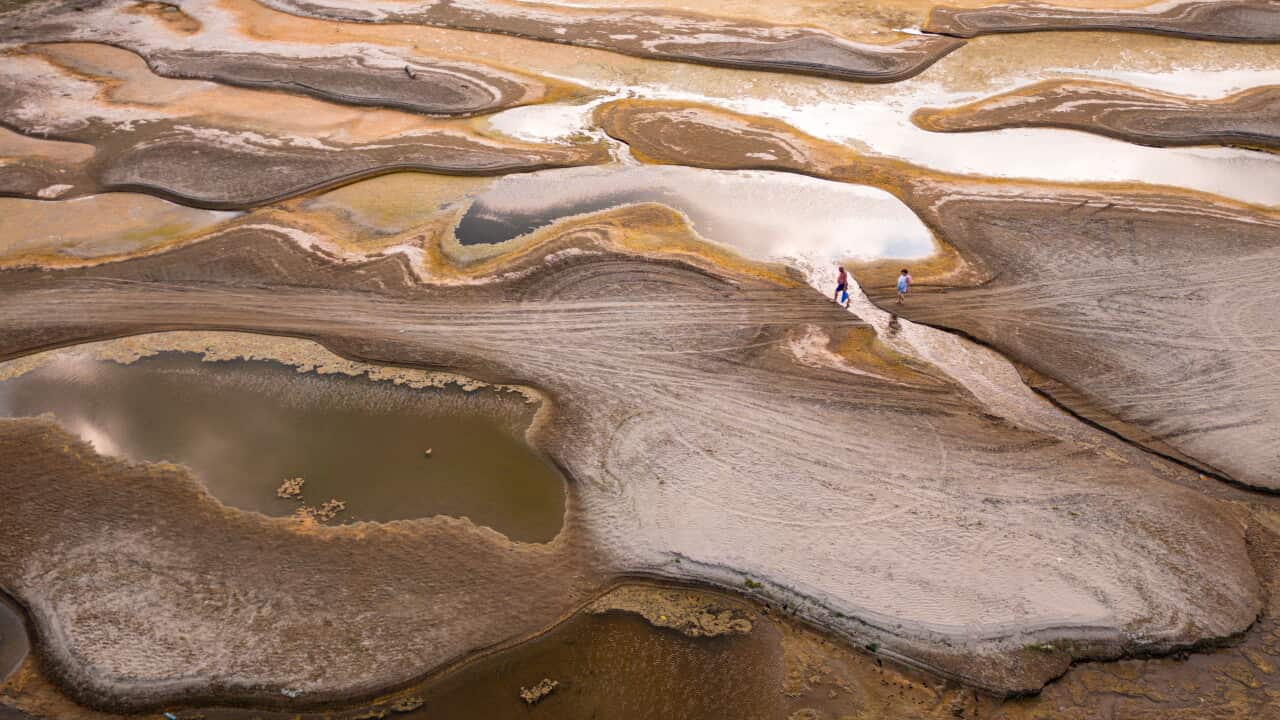
- In Europe, several rivers have reached record-low levels in recent weeks, after prolonged hot and dry conditions.
- Researchers say Australian rivers are shrinking, too, with dire consequences.
In northern Bulgaria, water in the Danube River has fallen so low that scientists say an ancient mammal has once again been exposed to the world.
The remains of what is believed to be a woolly mammoth were uncovered in late July and hailed by historians as a "very important" discovery.
Near the Serbian village of Prahovo, the rusted vessels and broken masts of German warships also resurfaced from the riverbank this month.
It's a sight unlike anything Serbian fisherman Zoran Lovric has seen.
"This has literally never happened before; these wrecks ... have never been visible like this. They've always been completely submerged; what we're seeing now is utterly unprecedented," he said.
News that makes sense
Your trusted source for staying up-to-date with the world around you. Get free daily news updates and analysis, straight to your inbox.
The discoveries along Europe's second-longest river come as parts of central and eastern Europe experience prolonged summer heatwaves and drought conditions.
Armin Fojskic, a member of the Zenica Fishermen Association, said if conditions don't ease, he expects a large number of fish to die in European rivers.
"Low levels of water are critical for the fish, especially if it is extremely low, and these past days it has really been extremely low," Fojskic said.
"The main danger for fish is oxygenation of the river; when water flow drops, the river loses oxygen and fish start to suffocate."
A global story?
According to the European Drought Observatory, about half of Europe and the United Kingdom experienced drought at various levels of intensity in July. Major wildfires have also burned across the continent.
But Peter Gleick, a hydro-climatologist and co-founder of the Pacific Institute in California, believes what Europe has experienced is not in line with normal weather fluctuations.
"Weather is always variable. We always have droughts. We always have floods somewhere at some time ... but what we're seeing now is extreme events worsened by human-caused climate change," Gleick told SBS News.
"We're dumping greenhouse gases into the atmosphere. We know that's warming the planet. We know that it's altering these extreme events by making them more extreme, more frequent, and more intense."
Gleick said the extreme patterns affecting rivers in Europe are similarly impacting water systems across the globe.
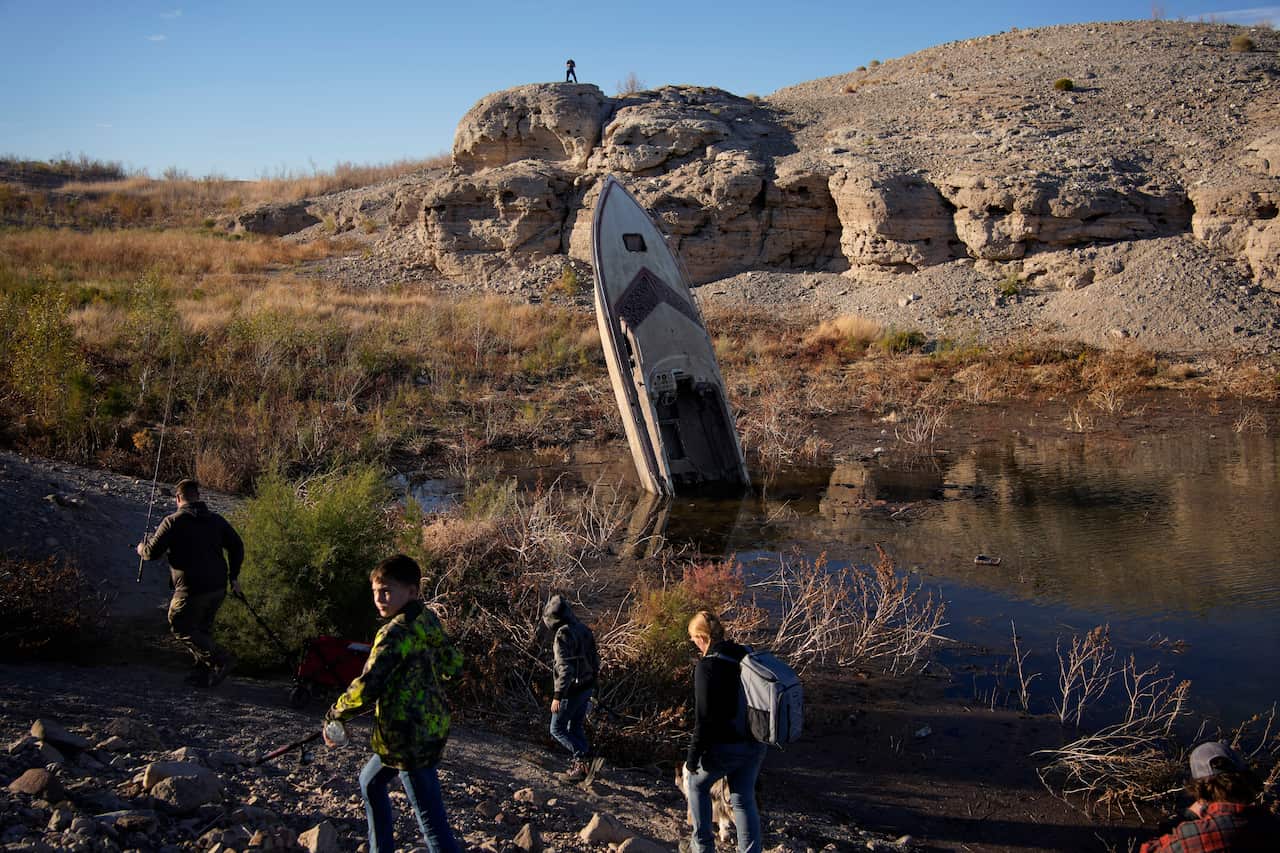
"In the western United States, the Colorado River, which is ... shared by seven [US] states and Mexico, is at record low levels," he said.
"Some of the largest reservoirs in the world are built on the Colorado River, and they're now at record lows."
What's at stake for Australia?
It's not just rivers in the northern hemisphere that are losing water.
Nick Bond, the director of freshwater ecosystems at La Trobe University, said the Murray-Darling Basin, Australia's largest river system, has been in decline for decades.
There are 77,000km of rivers in the basin, which stretches through most of NSW, all of the ACT, and parts of Queensland, South Australia and Victoria.
"Rivers across the basin have shown declining patterns of runoff. And in particular, certain parts of the Basin, we're seeing much longer periods of cease to flow, so periods when the rivers actually stop flowing altogether," Bond said.
Low water levels in the basin have been associated with multiple disasters including mass fish deaths, wetland loss and algal blooms.
The Murray-Darling Conservation Alliance said irrigated agriculture (the manual application of water to soil) accounts for around 80 to 90 per cent of water use in the Murray-Darling Basin.
In 2012, legal limits were established on how much water can be extracted from the basin.
The Murray-Darling Basin Authority is currently reviewing this plan, to improve the effectiveness and efficiency of its water management. One area under review is how the latest science can inform how the plan responds to a changing climate, including hotter, drier weather and more extreme droughts.
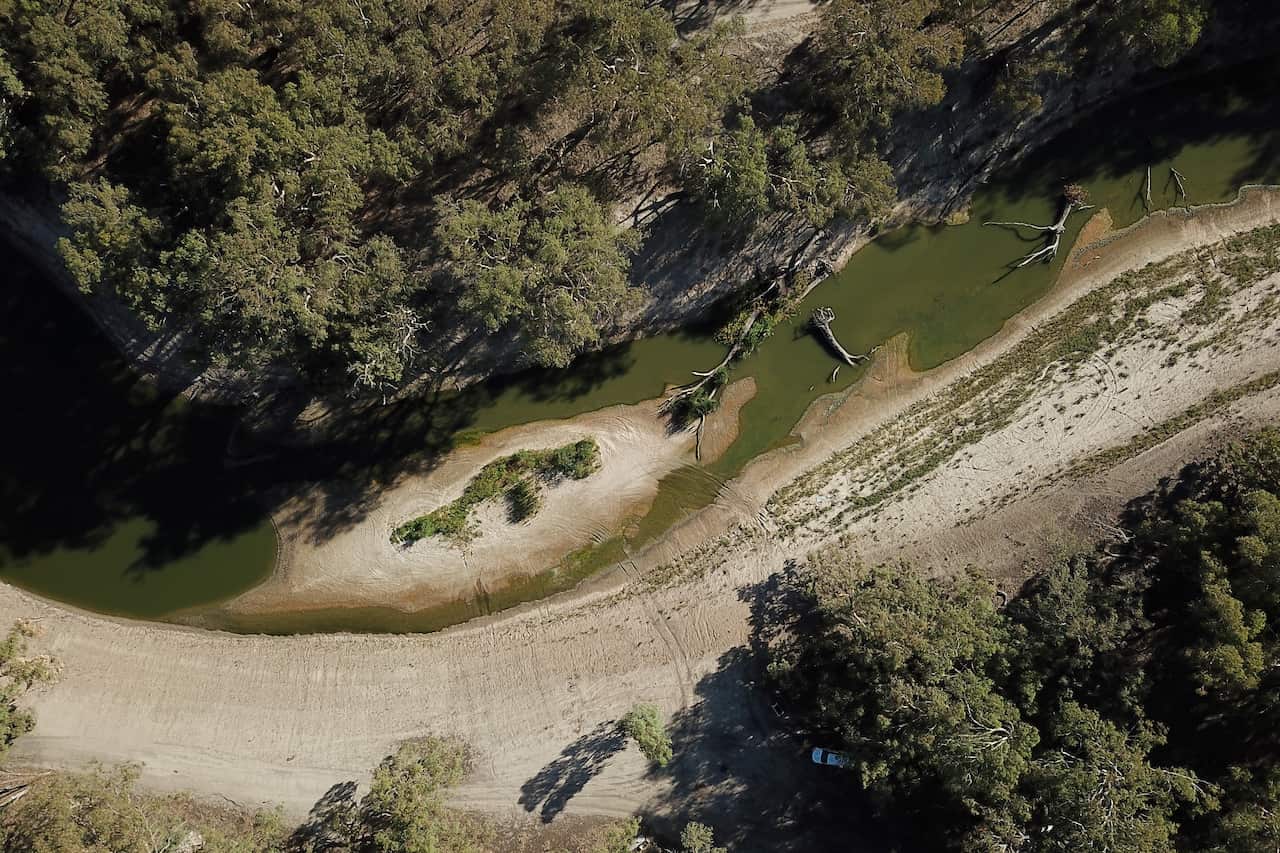
Bond said small streams which feed into larger rivers are also impacted — something he believes is often overlooked.
"Those small waterways actually make up the large proportion of the entire river network when you look at them on the map. So, the loss of flow and the loss of biodiversity in those systems is definitely a really important issue."
'Management has to change'
Bradley Moggridge is a Kamilaroi man and hydro-geologist at the University of Technology Sydney. He said the Murray-Darling Basin — known as Baaka by Barkindji people — holds deep significance for Aboriginal and Torres Strait Islander communities.
The waterway passes through the lands of more than 40 Indigenous nations, each with different connections, stories and language linking them to the water.
"The Barkindji [people] say they saw the river change and they could do nothing about it," Moggridge told SBS News.
"The Barkindji are very much closely connected to the Baaka. They are the river people, the Baaka people. For them to feel helpless on their own land, I think the management has to change. But also, what is happening upstream to cause these low flows?"
He said First Nations wisdom about the waterway, which stretches back tens of thousands of years, must be integrated into river management and protection.
"Understanding Country and having those long associations, those long observation relationships over thousands of generations, Aboriginal people do hold that knowledge. Whether they're in stories, songs, but also part of the oral traditions is passed down through the generations."
Public consultation for the Murray-Darling Basin Plan Review took place during February to May this year.
Throughout the 12-week period, the Murray-Darling Basin Authority said it spoke to over 2,900 participants and connected with more than 500 First Nations people and groups. The authority also visited almost 100 towns and regional centres.
For the latest from SBS News, download our app and subscribe to our newsletter.







